
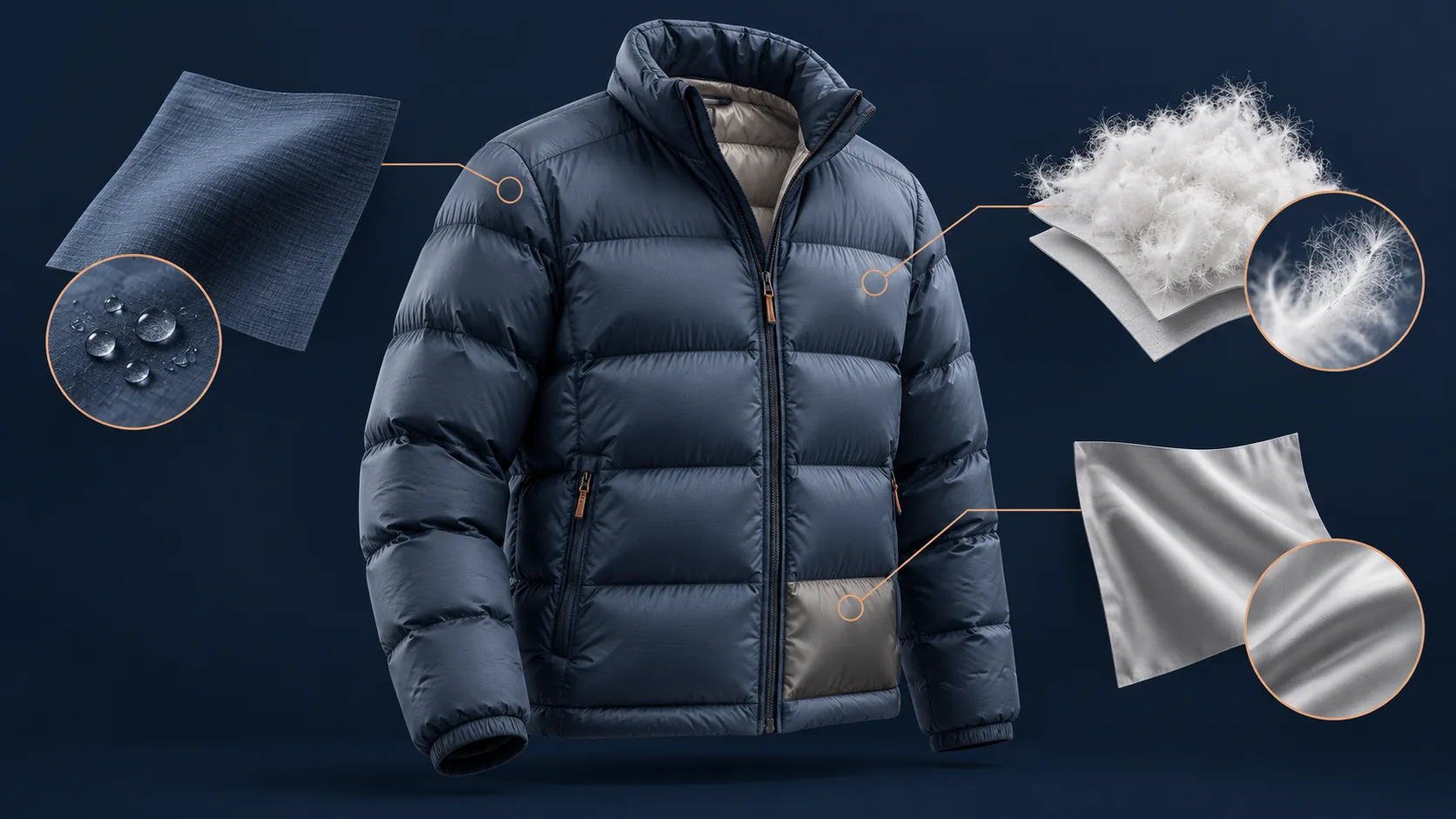
A puffer jacket is not defined by one material or one number. Its performance and commercial appeal come from a system: the intended use, shell fabric, insulation, lining, quilt construction and fit all need to work together. For buyers and product teams, the most useful starting point is a brief that describes the wearer and the conditions—not simply a request for “more warmth.”
1. Start with the use case
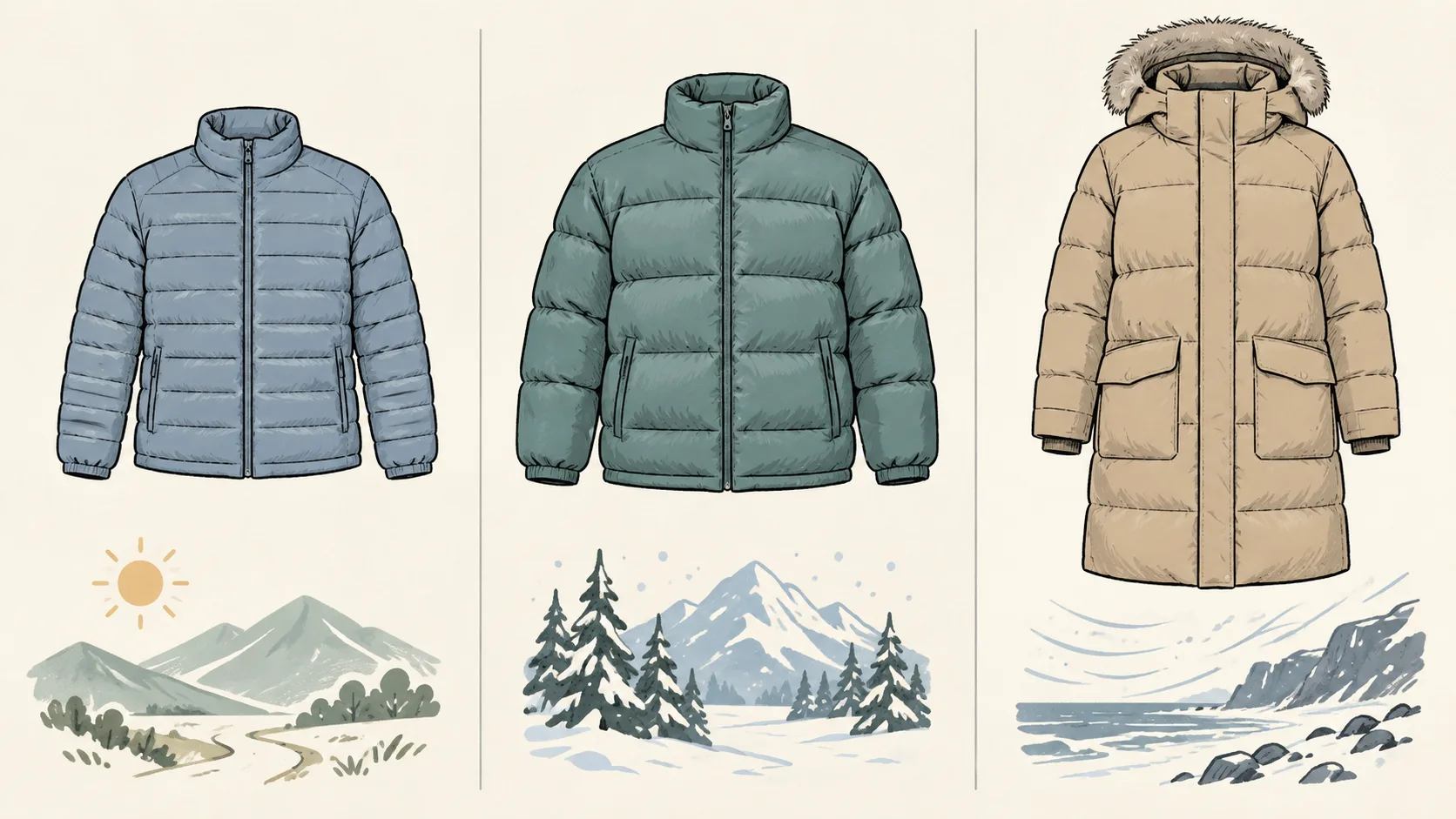
Clarify where, when and how the jacket will be worn. A light transitional layer, a core winter puffer and a long protective parka can all use padded construction, but they solve different problems. Climate, activity level, layering expectations, length and retail price position should guide the material direction from the first sample.
For example, a compact city layer may prioritize low bulk and easy movement. A core winter jacket may need a more substantial hand feel and dependable loft. A longer protective style often places greater emphasis on coverage, hood design, closures and wind protection. The right answer is the combination that matches the wearer’s real use case.
2. Read insulation as a system, not in isolation
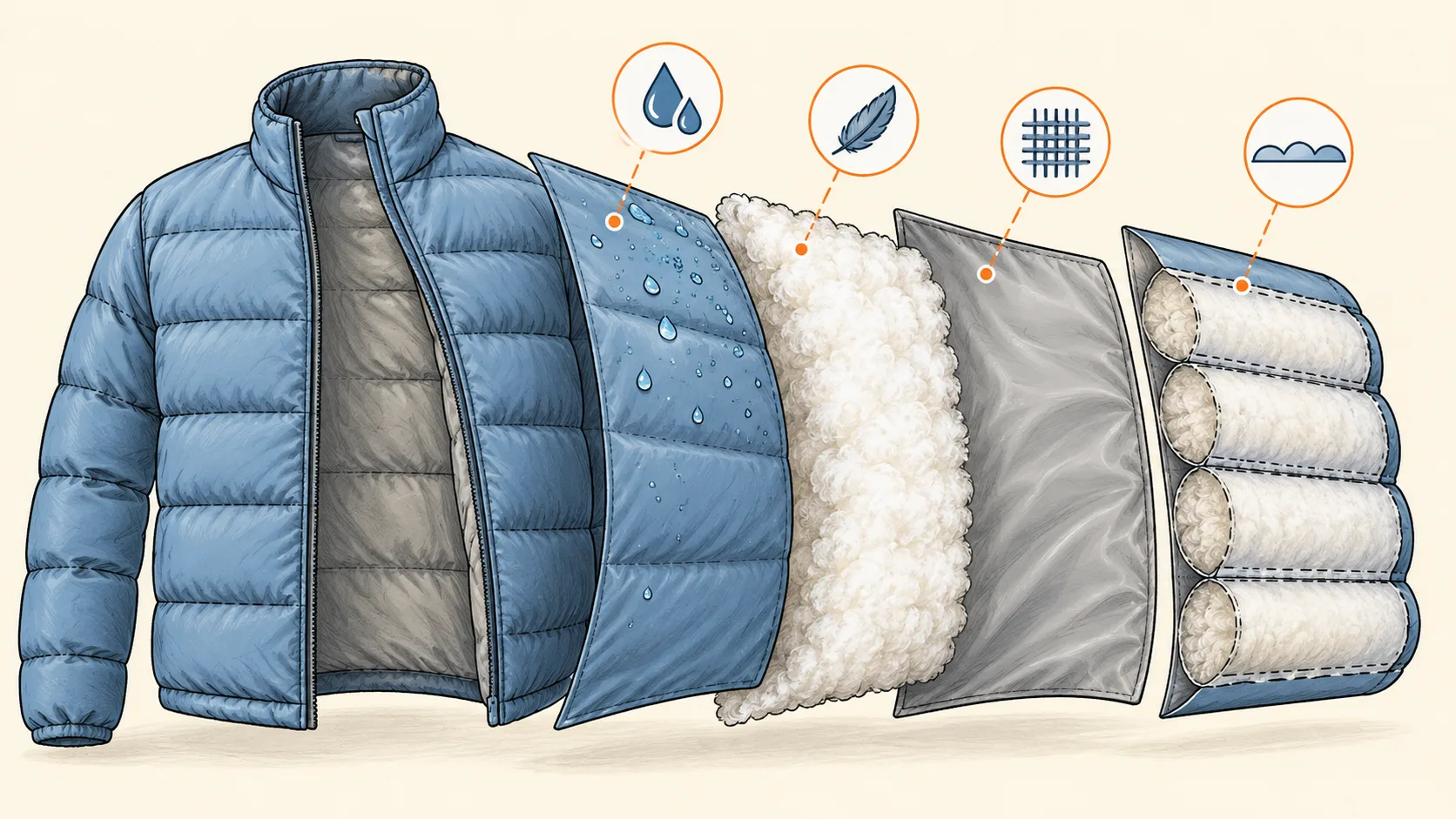
Insulation creates loft that helps retain warmth, but it is only one part of the finished garment. Down and synthetic fills have different characteristics, and both need to be evaluated alongside the shell fabric, lining, chamber design and intended care routine. Fill type, target weight and distribution should be reviewed on an approved sample rather than assumed from a single specification.
Quilting keeps insulation in position and shapes the jacket’s visual identity. Narrow channels can create a lighter, more technical appearance; larger baffles can create a fuller, more relaxed silhouette. The construction should distribute the filling consistently while allowing the garment to drape as intended. Review the sample after it has been handled, hung and worn—not only when it is laid flat.
3. Choose the shell fabric for the actual environment
The shell is the first line of defense against the weather and everyday wear. A buyer brief should define the desired hand feel, appearance, durability and weather protection before fabric selection begins. Matte and shiny finishes can communicate very different retail positions; lightweight and heavier fabrics can also change the silhouette and the perceived quality of a finished jacket.
Where weather exposure matters, discuss the expected level of wind and rain protection, then confirm the appropriate fabric construction and finish with the supplier. Avoid treating a fabric name or finish as a universal performance promise. Testing, garment construction and the final use environment all affect the result.
4. Do not overlook lining, trims and fit
A lining influences comfort, ease of dressing and the way a jacket moves over base layers. Zippers, snaps, drawcords, pocket bags, cuffs and hood adjustments shape the wearer experience just as directly. In a padded garment, these details must also be placed with the quilting layout in mind so that function and appearance remain balanced.
Fit review is especially important because insulation changes volume. Confirm the intended layering allowance, sleeve mobility, shoulder movement and hem behavior on a sample in the target size. If the product will be sold across multiple markets, make the size range and grade rules part of the brief early.
5. Turn the idea into a workable sourcing brief
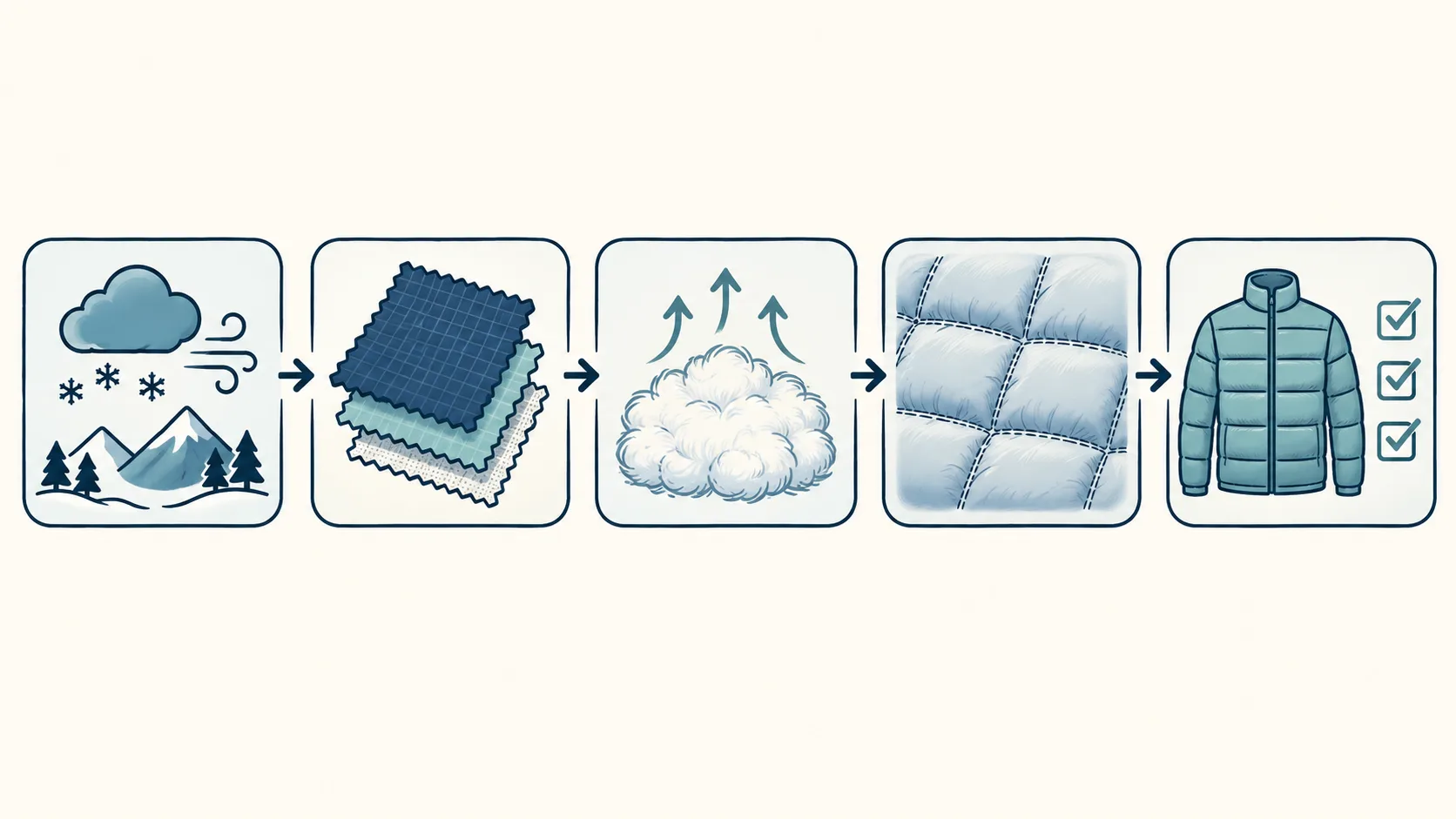
A strong brief helps development teams make better sample decisions and gives buyers a clearer basis for comparison. Record the product use case, destination climate, target customer, fabric direction, insulation target, quilt layout, fit intent, color plan, branding, packaging and any required tests or inspection points. Reference images are useful, but they should support—not replace—these decisions.
At approval, keep the agreed sample, measurement specification, material details and artwork together. That record makes bulk production, quality checks and repeat orders more consistent.
Key takeaway
The best puffer jacket program is built around a clear use case. When shell fabric, insulation, lining, quilting, fit and test requirements are considered together, the sample process becomes more focused and the finished product is easier to position, review and reproduce.